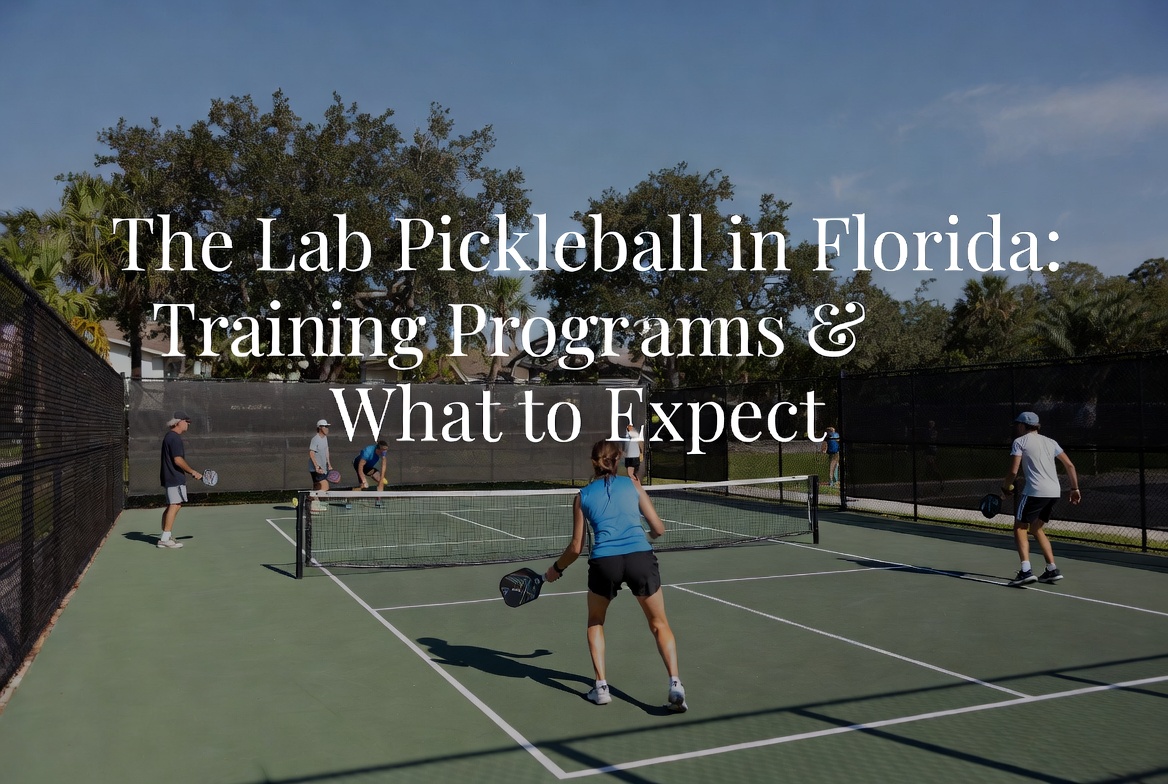
If you’re thinking about training at The Lab Pickleball in Florida, this guide walks you through what to expect: types of training programs, typical facilities and scheduling, what to bring, sample practice plans, day-one etiquette, and how to get the most out of lessons and clinics. Whether you’re brand-new to the sport or preparing for tournaments, the explanations and drills below will help you plan a productive visit.
Affiliate disclosure: Some links in this article point to products on Pickleball Paddles and other partners; as an affiliate we may earn a commission if you buy through those links at no extra cost to you. We only link to categories and items we think are helpful for players training at facilities like The Lab Pickleball.
Quick note before you go
“The Lab Pickleball” is a name used by training-focused facilities and clubs in several regions. Specific locations, hours, court surfaces, and program schedules can vary by facility and by season. Before you travel, confirm location, hours, and program registration via the facility’s official website, phone, or social channels. Expect some Florida locations to offer both indoor and outdoor courts depending on the site.
What is The Lab Pickleball?
The Lab Pickleball is typically a coaching-focused environment designed to accelerate player development. Facilities that use the “Lab” branding concentrate on structured skill progression: technical skill development, footwork and positioning, tactical awareness, and match simulation. Coaching is usually led by certified instructors or nationally recognized coaches and may include video analysis, group clinics, private lessons, and organized play such as leagues and round-robins.
Typical facilities and amenities
While specifics vary by location, here’s what you can commonly expect at a comprehensive pickleball training facility in Florida marketed as “The Lab”:
- Multiple courts: a mix of outdoor hard courts and covered or indoor courts for year-round training.
- Well-marked courts and quality nets to USAPA/IFP standards for game-accurate practice.
- Pro shop or gear area with paddles, balls, grips, and basic accessories for sale or demo.
- Ball machines or portable machines available for solo practice or coach-led feeds.
- Training spaces for footwork, mobility, and quickness drills—sometimes a small gym space.
- Video capture capability for stroke analysis and lessons.
- Locker rooms, restrooms, and a seating/viewing area for players and spectators.
- Organized event space for clinics, camps, and tournaments (some locations host regular events).
Typical opening hours and scheduling
Hours vary by location, season, and whether courts are indoor or outdoor. As a rule of thumb for training facilities in Florida:
- Weekdays: early morning sessions (6–9 a.m.), mid-morning/afternoon clinics (9 a.m.–3 p.m.), and evening clinics or open play (4–9 p.m.).
- Weekends: clinics, camps, and open play commonly scheduled throughout the day, often with more adult leagues and social play.
Always check with the specific facility for exact hours, holiday schedules, and any seasonal changes. Many labs publish weekly schedules and allow online booking for clinics and private lessons.
Overview of training programs: what you’ll find
Training programs at The Lab Pickleball typically follow a progression from beginner fundamentals to advanced strategy and match preparation. Here’s a breakdown of typical offerings and what each focuses on.
Beginner / Fundamentals Programs
Goal: introduce rules, basic strokes, scoring, and court positioning.
- Key skills taught: grip basics, ready position, forehand and backhand groundstrokes, serve and return basics, basic volleys, and simple dinking technique.
- Structure: short drills alternating between coach feed and cooperative rallies, followed by supervised games to apply skills.
- Best for: players who have never played or have only casual experience and want a solid technical foundation.
Intermediate / Skills Development
Goal: improve consistency, introduce third-shot drop, transition to the kitchen, and refine serve and return placement.
- Key skills: controlled third-shot drop, cross-court dinks under pressure, transition footwork, serve variation, and communication in doubles.
- Structure: targeted drills (e.g., dink-to-drop progressions), movement and footwork exercises, pressure-based mini-games and situational point play.
- Best for: players who can sustain rallies and want to move up to the non-volley zone consistently.
Advanced / Strategy & Tournament Prep
Goal: sharpen tactics, serve/return weapons, pro-level footwork, and match-specific training.
- Key elements: match strategy (stacking, poaching timing), serve and return patterns to create openings, sharpening third-shot attack vs. drop decisions, high-level drills that simulate tournament pressure, video reviews, and scouting.
- Structure: small-group sessions, 1:1 video coaching, match-play with coach feedback, and stamina/speed training.
- Best for: competitive players preparing for local, regional, or national tournaments.
Private & Semi-Private Lessons
Goal: one-on-one technique correction or small-group focused improvement.
- Benefits: personalized feedback, faster correction of mechanical issues, tailored drill selection, and specific match-scenario practice.
- What to expect: assessment at first lesson, homework drills, measurable short-term goals, and progress tracking.
Clinics, Bootcamps & Camps
Goal: concentrated learning over a short time—often used to build fundamentals quickly or fine-tune specific skills (dinks, serves, third-shot drops).
Leagues, Round Robins & Social Play
Goal: provide match experience, ranking ladders, and community play where training goals can be tested under match conditions.
How programs are typically structured (sample week)
Here’s a sample weekly structure you might find at a training-focused facility like The Lab Pickleball:
- Monday: Technique clinic—focus on dinks and third-shot drop (60–90 minutes)
- Tuesday: Serve & return clinic + target practice (60 minutes)
- Wednesday: Intermediate drilling + supervised match play (90 minutes)
- Thursday: Footwork and transition training (60 minutes)
- Friday: Private lessons / video review sessions
- Saturday: Round-robin and tournament-style play
- Sunday: Open play and recovery/stretch session
What to expect on your first visit
First day at a new training facility can feel different from casual park play. Expect the following:
- Check-in and waiver: most facilities require registration and a signed waiver—arrive 10–15 minutes early.
- Warm-up: coaches typically lead a structured warm-up focusing on mobility and stroke prep.
- Group introductions: coaches will clarify session goals, drills, and safety notes.
- Drill format: short, focused blocks of drilling with coach feedback followed by frequent rotation to maintain reps and intensity.
- Closing recap: coaches usually summarize key takeaways and assign homework drills.
What to bring and recommended gear
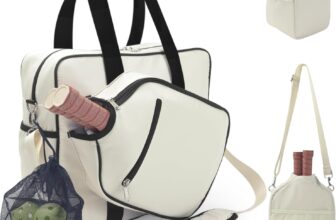
Pack a small bag with essentials so you are ready for productive lessons and open play:
- Pickleball paddle matched to your level and style. If you want to compare options, see categories for Beginner Pickleball Paddles, 14mm Pickleball Paddles, and 16mm Pickleball Paddles.
- Extra paddle or demo paddle (some pro shops let you demo advanced models from categories like Advanced Pickleball Paddles or CRBN Pickleball Paddles).
- Pickleballs: for clinics you’ll often use facility balls, but bringing a few of your own is helpful. Check Bulk Pickleball Ball Packs if you want spares.
- Proper court shoes: use supportive indoor/outdoor court shoes depending on the surface. See Indoor Pickleball Court Shoes.
- Towel, hydration, sunscreen (for outdoor courts), and a hat or visor.
- Optional protective gear: ankle supports, elbow braces, or compression sleeves are useful—see Ankle Supports and Elbow Braces.
Recommended paddle buying tips for training
Choosing the right paddle helps your progress. When you shop, consider:
- Weight range: lighter paddles (approx. the low end for you) are easier for quick volleys and dinks; midweight paddles offer a balance between control and power.
- Grip size: fit to your hand to maintain control and reduce compensations in technique.
- Core thickness / firmness: thinner cores usually give more feel and control; thicker cores may add power—test before committing.
- Surface texture: smoother surfaces feel different for spin. Demo different paddle surfaces if possible.
- Try demo paddles during lessons to gain a feel for what suits your game and the training emphasis at The Lab.
Sample comparison/checklist table: Program types at a training lab
| Program | Duration | Main Focus | Who it’s for | What to Bring |
|---|---|---|---|---|
| Beginner Fundamentals | 60–90 min | Basic strokes, scoring, dinks, serves | New players | Beginner paddle, balls, shoes |
| Intermediate Skills | 60–90 min | Third-shot drop, transition, consistency | Regular players moving to NVZ | Midweight paddle, extra balls |
| Advanced / Tournament | 90–120 min | Tactics, match-sim, video feedback | Competitive players | Preferred tournament paddle, notebook |
| Private Lesson | 30–60 min | Personalized corrections | All levels | Paddle, specific questions/goals |
Practical drills you’ll likely run into (with step-by-step guidance)
1) Dink consistency progression
- Partners at the kitchen line, start with cooperative dinks (short, controlled) for 2–3 minutes to warm up.
- Introduce target dinks—place cones on the opponent’s kitchen line and aim to land 5 balls consecutively to a target.
- Add pressure: player A must hold the ball; player B attempts to force a high return. Repeat and switch.
- Common coaching cues: soft wrist on contact, push through the ball, maintain paddle face slightly open, small body movement into the shot.
2) Third-shot drop progression
- Start with coach feeds from baseline to baseline player; players practice dropping to the NVZ line from 12–15 feet.
- Progress to moving targets: have a partner return and the dropper must place the ball in the kitchen to neutralize the point.
- Progress further by adding transition: after a successful drop, the dropper moves forward to the NVZ for the next ball.
- Common coaching cues: short compact stroke, let the bounce do the work, aim for the opponent’s feet near the kitchen line.
3) Serve and return target practice
- Designate return targets: deep backhand corner, middle, or body returns—practice hitting a set of 10 to each target.
- For servers, work on depth and placement—alternate deep and short serves to create tactical variety.
- Common coaching cues: toss/extension consistency, aim for depth on serves, and return with a low trajectory to neutralize placement.
4) Transition / footwork drill
- Start at the baseline; coach feeds a ball to the player who must execute a third-shot drop and jog forward to the NVZ cone before the next feed.
- Increase pace: use continuous feeds so players must maintain movement and get set at the NVZ quickly for volleys.
- Common coaching cues: small running steps, split step at contact, keep weight forward when volleying.
Common mistakes players make at training and how to fix them
- Rushing to the net too early: fix by working on consistent third-shot drops and stepping into the NVZ only after a successful neutralizing shot.
- Popping the ball up on dinks and drops: fix with a shorter paddle swing and soft wrist—practice against low-to-mid height feeds.
- Poor court positioning and communication in doubles: use drills that emphasize switching, calling shots, and who takes lobs/poaches.
- Inconsistent serves: focus on repetitive serve practice with clear targets and rhythm rather than power.
How to get the most from private lessons and clinics
Private lessons are most effective when focused, measurable, and followed up with homework:
- Set clear, short-term goals with your coach (e.g., “reduce pop-ups on dinks by 70% in four sessions”).
- Ask for video or written notes on technique corrections and repeat the drills at home or during open play.
- Book periodic video-review lessons to track changes and make small, measurable adjustments.
- Combine private lessons with group clinics so you apply corrected mechanics under pressure.
Tournament prep checklist
- Plan match-sim sessions at least twice a week before an event.
- Work on serve patterns and returns specific to opponents you expect to face.
- Prioritize quick reaction and footwork drills to maintain court coverage under fatigue.
- Use video review to identify recurring tactical weaknesses and set practice drills accordingly.
Etiquette and community culture at training labs
Training facilities often stress respect for other players and coaches. Typical etiquette includes:
- Arrive on time and ready to play to avoid disrupting drills.
- Follow coach instructions and rotation; only ask for feedback at appropriate times.
- Limit wandering spectators on court decks during sessions—use viewing areas where provided.
- Respect demo paddles and pro-shop equipment—return items clean and intact.
- Communicate with partners during doubles and call balls clearly to avoid collisions.
How to continue progress between visits
Your growth at a training facility compounds with consistent follow-up:
- Keep a practice log: note drills, coach corrections, and what to improve before the next session.
- Practice short, focused reps—20–30 minutes on a single skill (e.g., third-shot drops) is often better than unfocused rallies.
- Use ball machines, partner feeds, or wall practice to reinforce technique when a coach is not available.
- Mix on-court practice with off-court mobility and light conditioning to support movement patterns used during play.
FAQ
-
Q: Do I need to reserve a spot for clinics or can I drop in?
A: Most labs recommend reserving spots for clinics and especially for private lessons—capacity can fill quickly. Drop-in options may be available during open-play hours but check the schedule and booking policy first.
-
Q: What level of paddle should I use during my first lesson?
A: Use a paddle you feel comfortable controlling. If you’re brand-new, a beginner paddle or demo paddle is fine. If you already have a preferred paddle, bring it so the coach can tailor advice to your equipment.
-
Q: Are ball machines commonly used in lessons?
A: Yes—ball machines are often used for repetition drills, serve/return practice, and to isolate particular shots. Coaches will use machines selectively to maximize reps and technique work.
-
Q: How soon can I expect improvement?
A: Improvement depends on practice consistency, quality of coaching, and focused repetition. Small technical changes can be noticeable within a few lessons; sustained performance changes typically require several weeks of structured practice.
-
Q: Are there youth programs or camps at the Lab?
A: Many training facilities offer youth classes, camps, and after-school programs. If you have a young player, ask about age group structure, coach-to-player ratio, and progression routes.
-
Q: Can I demo advanced paddles at the facility?
A: Many labs have demo programs and pro-shop inventory where you can try different paddle types. If demo paddles are available, use them during lessons to compare control and feel under coached conditions.
Recommended internal resources and gear links
To prepare for sessions at The Lab Pickleball, these category pages can help you find appropriate gear:
- Beginner Pickleball Paddles — good for new players building fundamentals.
- Advanced Pickleball Paddles — useful if you plan to demo and refine play at a higher level.
- Bulk Pickleball Ball Packs — convenient for personal practice and drills.
- Indoor Pickleball Court Shoes — choose shoes appropriate to your court surface.
- Ankle Supports and Elbow Braces — optional supports players like to have for confidence during training.
Final tips and conclusion
Training at a dedicated facility like The Lab Pickleball can boost your development quickly if you approach it with a plan: arrive prepared, set clear goals with your coach, focus on targeted repetition, and follow up with home practice. Use private lessons for technical fixes, group clinics for applying skills under pressure, and open play for match experience. Don’t be afraid to ask coaches for concrete homework drills and video feedback—most coaches want measurable progress for their students.
Above all, prioritize consistent practice over one-off intensity. If you maintain a steady routine and use sessions at The Lab to reinforce key mechanics and decision-making, you’ll maximize the value of the training environment. Confirm the specific location and hours before you go, and bring a paddle and shoes suited to the session you register for.
If you’d like, tell me the specific Florida city where the Lab location you plan to visit is, and I can help you draft a call/email script to confirm hours, court conditions, and program spots—or help pick paddles and gear options for your skill level.