Affiliate disclosure
Some of the paddles discussed below are linked to products on this site. As an affiliate resource, pickleball-paddles.org may earn a commission if you purchase through those links — at no extra cost to you. We focus on best-selling pickleball paddles and practical buying guidance to help you choose the right paddle for your game.
Quick summary — who this guide is for
This long-form guide is for players who are trying to choose between 14mm and 16mm pickleball paddles, or for anyone wondering how paddle thickness will affect their shots. Whether you’re a beginner shopping your first paddle, a recreational player looking for more control, or a competitive player weighing power versus touch, this article explains the real-world differences, trade-offs, and best-selling paddles currently available.
What we’ll cover
- How 14mm and 16mm paddles differ in construction and feel
- How thickness affects power, control, touch, and spin
- When to choose a 14mm paddle vs a 16mm paddle
- Comparison table for quick side-by-side decisions
- Detailed reviews of best-selling paddles from our selection
- Buying checklist, practical tips, and final recommendations
- FAQ: common questions players ask
Basics: what does “14mm” or “16mm” mean?
The “14mm” and “16mm” labels refer to the thickness of the paddle core (the material sandwiched between the faces). Thicker cores are often made with higher-density polymer or honeycomb designs; faces may be carbon, graphite, fiberglass, or other composites. Thickness influences stiffness, feel, and how the ball reacts on contact. Consider thickness as one important specification among many — weight, face material, shape, grip size, and handle length are also essential.
How thickness affects play: practical details
1. Power and trampoline effect
In general, thicker cores (like 16mm) tend to be stiffer and can produce more power on drives because the core compresses less and can return more energy. Thinner cores (14mm) compress slightly more, which often reduces the “trampoline” effect and can feel less powerful on fast drives. That said, face material and paddle weight heavily influence power too, so thickness is only one part of the equation.
2. Control and touch
Thinner cores usually provide better touch and feel on soft shots such as dinks and third-shot drops. The extra give in a 14mm core lets you sense the ball longer on the face, which many players describe as improved feedback and finesse. Players who prioritize soft game control often prefer thinner cores for this reason.
3. Sweet spot and consistency
Core thickness and paddle construction influence sweet spot size and consistency. A well-built 16mm paddle with a rigid face and dense core can deliver a predictable pop and a consistent sweet spot across the face, which some aggressive players like. Thinner cores can yield a slightly smaller or more touch-dependent sweet spot but may allow subtler placement when you make clean contact.
4. Vibration and arm feel
Because 16mm paddles are typically stiffer, they may transmit more vibration to the hand on off-center hits. Conversely, 14mm paddles can dampen vibration a bit more. If you are sensitive to vibration or prefer a softer impact feel, you may notice a difference when lowering thickness.
5. Spin potential
Spin depends mostly on surface texture and stroke mechanics, not thickness alone. However, a paddle that lets the ball sit slightly longer on the face (often thinner cores) can help some players produce touchier spin on soft shots. Many modern paddles combine textured faces with both 14mm and 16mm cores to optimize spin.
6. Maneuverability and weight distribution
Thickness can affect perceived balance. Thicker cores can shift the mass slightly depending on construction; however, actual weight and how that weight is distributed (edge, handle, face) play a larger role in maneuverability. Make sure to factor in overall paddle weight and balance along with thickness.
Indoor vs outdoor — does thickness matter?
Pickleball balls and court conditions alter how paddles feel. Outdoor balls are heavier and wind can affect shot trajectory; many players choose paddles with more power (often 16mm with more rigid faces) for outdoor play to counter environmental losses. Indoor play, where balls are lighter and conditions consistent, often rewards finesse and touch, so some players prefer 14mm cores. These are tendencies rather than rules — personal feel and style are decisive.
Who should choose 14mm vs 16mm?
- Choose 14mm if: You prioritize soft hands, dinking/control, precision placement, and touch. Good for players who play a patient, placement-based game or spend a lot of time at the NVZ (kitchen).
- Choose 16mm if: You want a bit more pop and stability on drives and volleys, or you prefer a firmer impact feel. Good for aggressive players and those seeking a balance between power and control.
Comparison table: 14mm vs 16mm paddles (practical checklist)
| Feature | 14mm core | 16mm core |
|---|---|---|
| Typical feel | Softer, more forgiving, more dwell time | Firmer, quicker response, less dwell |
| Power | Less built-in pop — relies on stroke speed | More pop and stability on drives |
| Control & touch | Generally better for dinks and soft shots | Good control with firmer feedback — slightly less touchy |
| Vibration | Often reduced vibration, smoother feel | Can transmit more vibration on off-center hits |
| Best for | Players seeking finesse, patience, and touch | Players who want a balance of power and control |
| Common face pairings | Graphite, fiberglass, textured faces for spin | Carbon/graphite/fiberglass — often with thicker polymer cores |
How to choose beyond thickness: other important specs
- Weight: Paddle weight influences swing speed and stability. Lighter paddles are more maneuverable; heavier paddles stabilize shots and add raw momentum.
- Face material: Carbon/graphite faces often feel crisp and are common on higher-end paddles. Fiberglass faces can feel livelier. Texture affects spin.
- Grip size and handle length: Choose a grip size that fits your hand; incorrect grip sizing affects control and can lead to compensations in stroke mechanics.
- Grip tackiness and overgrips: The grip surface should feel secure. Many players add overgrips to fine-tune thickness and tack.
- Shape: Standard vs elongated shapes change sweet spot placement and reach.
- Edge guard vs edgeless: Edge design affects durability and sweet spot. Edgeless paddles can increase effective face area but sometimes sacrifice some durability if not well-built.
Best-selling paddle picks — comparison before details
The paddles below are best-sellers on our site and represent both 14mm-style and 16mm-style core constructions and top brands across beginner, control, and advanced categories. Study the short list, then read the individual coach-style breakdowns that follow.
Products compared in this guide
- Nightblade Raw Carbon Fiber Pickleball Paddle — foam-filled polymer honeycomb core, long handle
- Pickleball Paddles T700 Carbon Fiber — 16mm high-density polypropylene honeycomb, T700 surface
- Selkirk Sport SLK Omega — 16mm polymer core with foam walls, ProSpin+ Texture
- Selkirk Sport Amped Control — Fiberglass face, 16mm X5 core
- USAPA Approved 6-Layer Construction T700 Carbon Fiber — 16mm thermoformed paddle (high-spin)
- 16mm Carbon Fiber Pickleball Paddle (set of 2) — USAPA approved, beginner-friendly
In-depth paddle picks and who they’re for
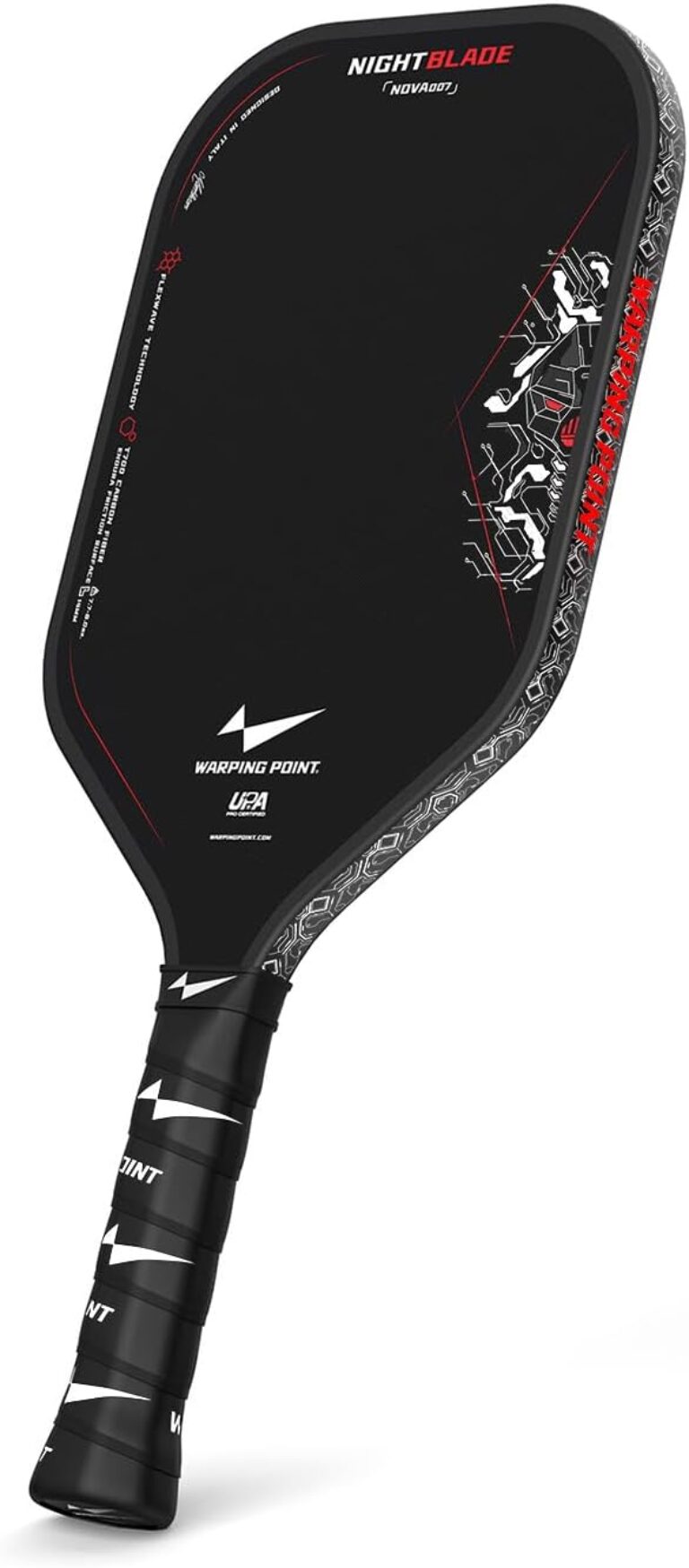
1) Nightblade Raw Carbon Fiber Pickleball Paddle
Nightblade Raw Carbon Fiber Pickleb…
To calculate the overall star rating and percentage breakdown by star, we don’t use a simple average. Instead, our system considers things like how recent a review is and if the reviewer bought the item on Amazon. It…
Who it’s best for: Players who want a carbon-face paddle with a foam-filled polymer honeycomb core and a longer handle option for two-handed backhands or added reach. The product’s description mentions an Endura friction surface that emphasizes spin and an enhanced impact feel.
Key strengths
- Foam-filled polymer honeycomb core contributes to a balanced feel and impact dampening.
- Long handle suits two-handed backhands and provides extra reach for some shots.
- Surface designed to enhance spin and grip on the ball.
Possible drawbacks
- Long handle may be less comfortable for players who prefer short grips and quick wrist actions.
- Carbon faces are often stiffer — some players may find them firmer compared to fiberglass.
Who should choose it: Intermediate players looking for a carbon paddle that supports spin and a solid impact feel, and players who want a longer handle option.
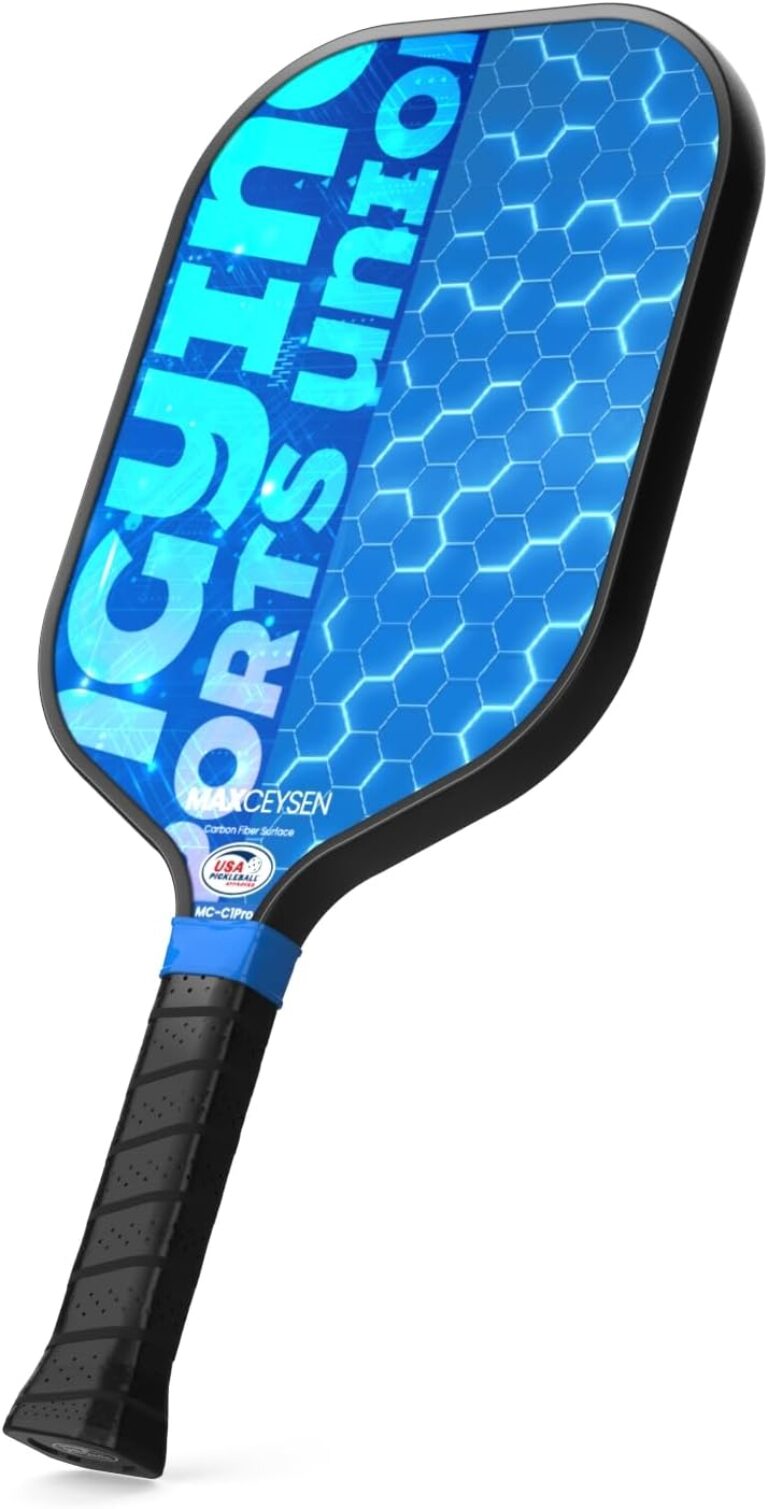
2) Pickleball Paddles T700 Carbon Fiber (16mm)
Pickleball Paddles T700 Carbon Fibe…
PROFESSIONAL MANUFACTURER OF PICKLEBALL CARBON FIBER RACKETS The 16mm core of the pickleball paddles is a high-quality high-density polypropylene honeycomb design, which effectively reduces vibration and is strong and stable. The surface of the racket is T700 carbon…
Who it’s best for: Players seeking an affordable, performance-minded carbon-face paddle with a 16mm high-density polypropylene honeycomb core and a surface built from T700 carbon fiber.
Key strengths
- 16mm high-density polypropylene core is described as reducing vibration and improving stability.
- T700 carbon surface emphasizes stiffness and a crisp response.
- Design targeted at players wanting a lightweight, high-energy-feel paddle.
Possible drawbacks
- Carbon fiber faces can be less forgiving on off-center hits for some players.
- At low price points, quality control and feel can vary between manufacturing runs — inspect before extended use.
Who should choose it: Recreational to club players who want a 16mm carbon-style paddle with emphasis on power and stability. A fit for players experimenting with a firmer feel without a large investment.
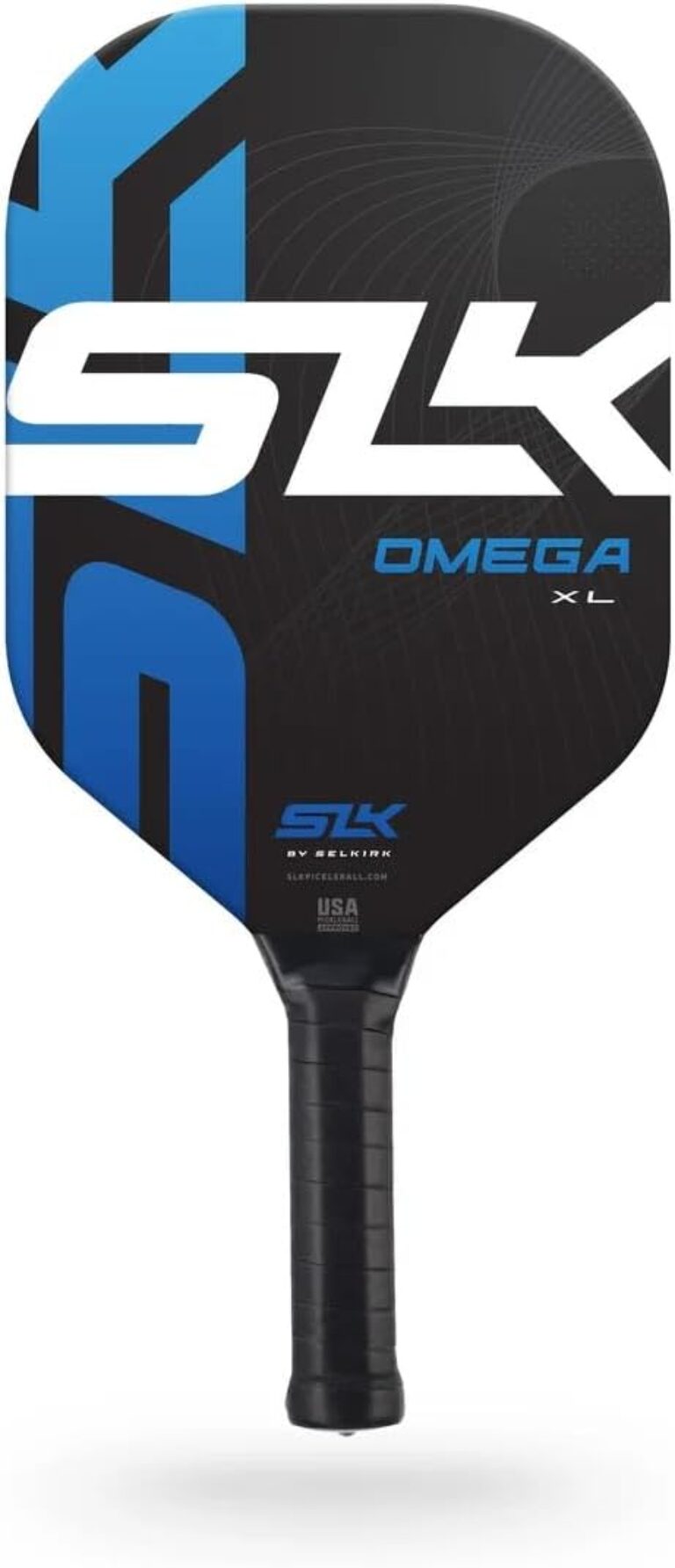
3) Selkirk Sport SLK Omega (Hybrid Air Series)
Selkirk Sport SLK Omega Pickleball …
The SLK Omega Hybrid Air Series delivers power, control, and speed in a quality carbon fiber pickleball paddle. Designed in the USA, it features a 16mm polymer core with foam walls, ProSpin+ Texture for spin, and an aerodynamic…
Who it’s best for: Players who want a reliable mid-range paddle with a 16mm polymer core and spin-enhancing ProSpin+ texture. Selkirk is a recognized brand with options for different playing styles.
Key strengths
- 16mm polymer core with foam walls designed for a blend of power and touch.
- ProSpin+ texture helps with spin generation when combined with good technique.
- Aerodynamic design aimed at faster swing speeds and improved control.
Possible drawbacks
- Players seeking the softest possible feel for delicate dinks may prefer a thinner core.
- Some players prefer different grip feel or shape — test if possible.
Who should choose it: Club players and serious recreational players who want a dependable 16mm paddle engineered for spin and balanced performance.
4) Selkirk Sport Amped Control (16mm X5 core)
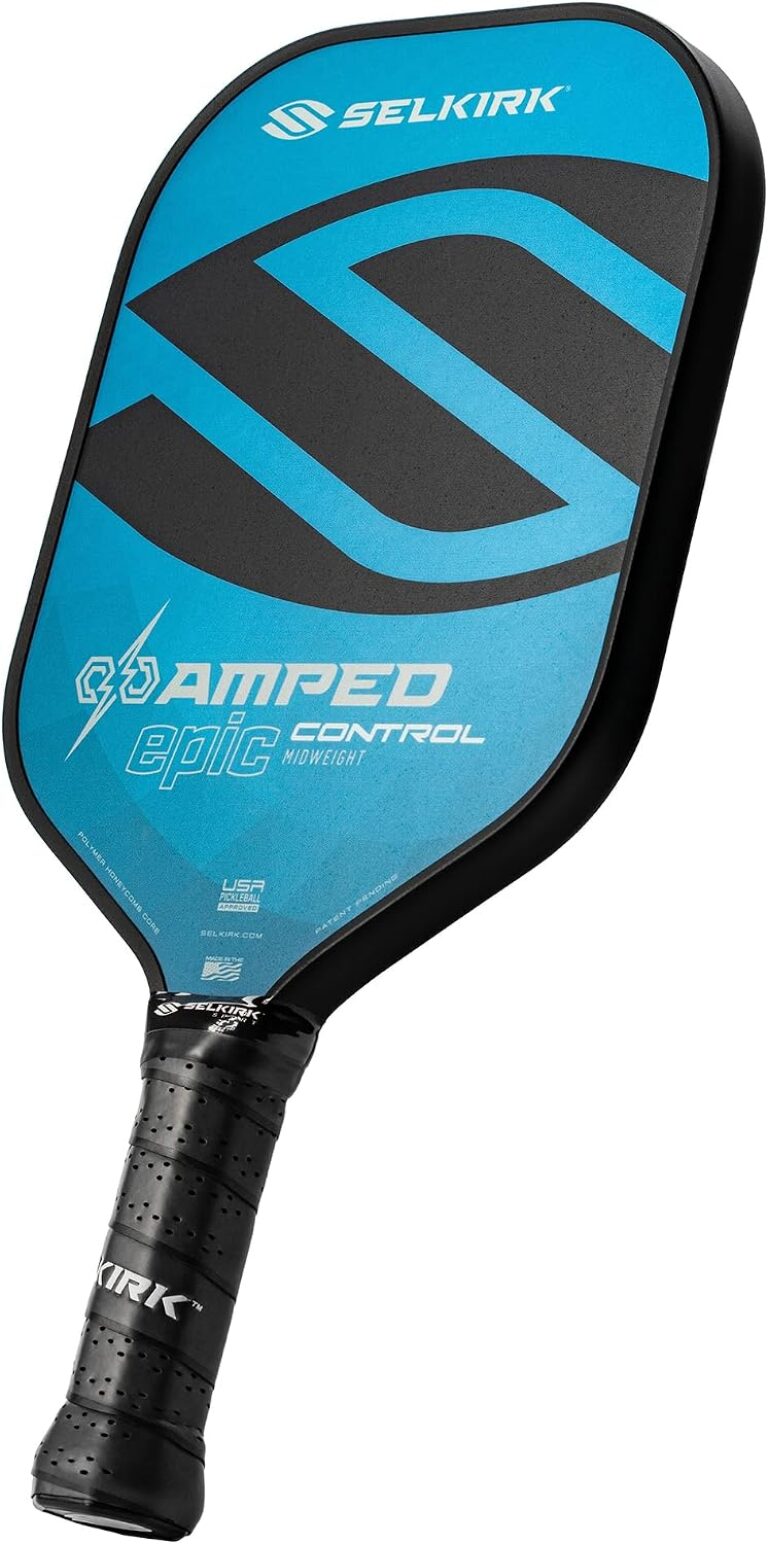
Selkirk Sport Amped Control Pickleb…
Experience balanced play with the Selkirk AMPED Control, a refined selkirk pickleball paddle. Building on the original AMPED innovation, this paddle is designed for those seeking consistent control and lasting spin. The new Ultra Durable coating and Fiberglass…
Who it’s best for: Players prioritizing control who still want modern coatings and textures for spin. The Amped Control is positioned as a balanced paddle built for consistent play.
Key strengths
- X5 honeycomb core with 16mm construction aimed at consistent feel and control.
- Ultra Durable coating and textured face for enhanced longevity and spin potential.
- Selkirk’s design focus on control makes this a go-to for players who play a placement-based game.
Possible drawbacks
- Some players seeking maximum power may prefer a different face-core combination.
- Depending on your hand size and grip preference, you might need a custom overgrip.
Who should choose it: Players who want a control-oriented 16mm paddle from a brand known for consistent play characteristics and durability.
5) USAPA Approved 6-Layer Construction T700 Carbon Fiber (16mm)
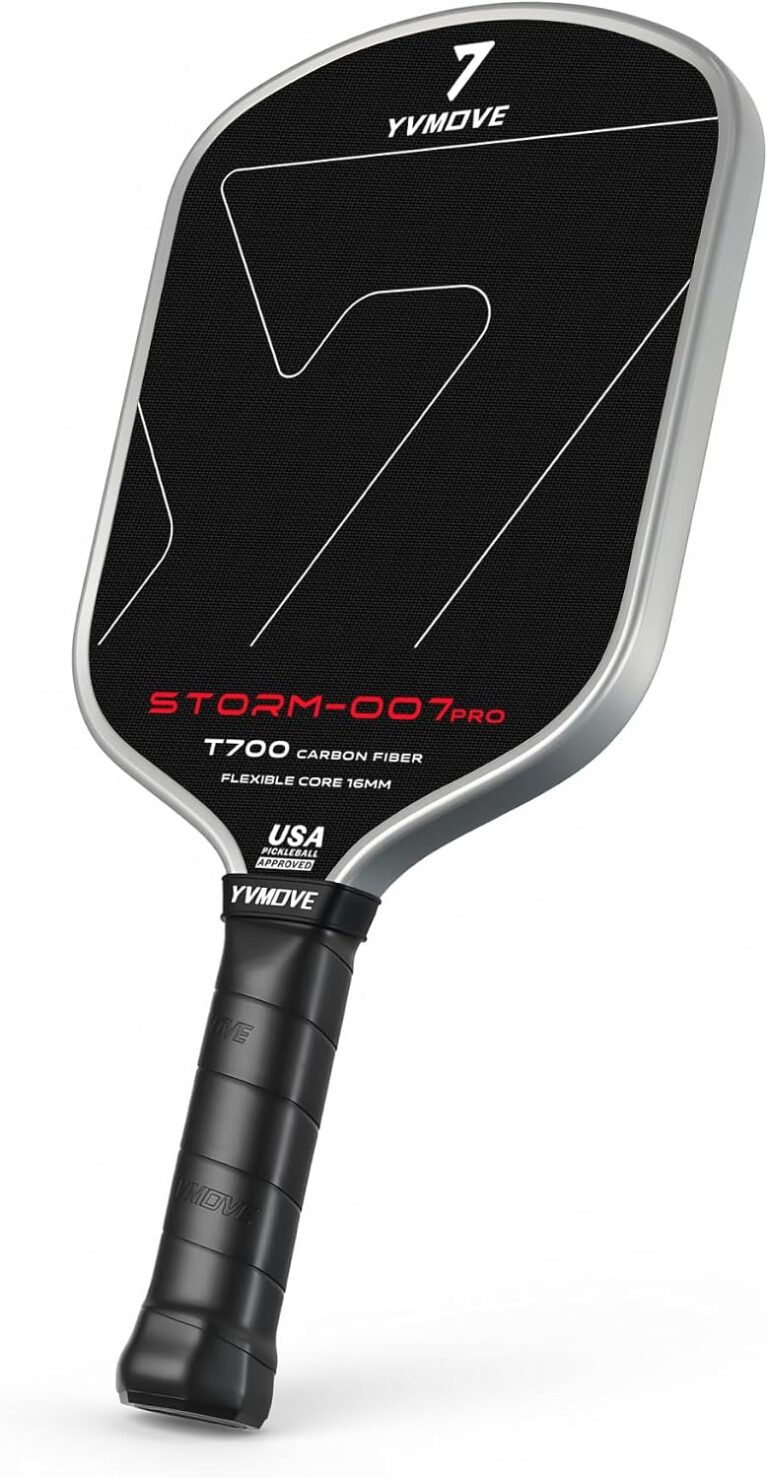
USAPA Approved 6-Layer Construction…
From the brand T700 Carbon fiber paddle T800 Carbon fiber paddle Hybrid Titanium-carbon fiber Paddle Care & Comfort Pro Equipment 【T700 Carbon Fiber】STORM 007 Pro Aerospace-grade T700 carbon fiber construction delivers 60% higher tensile strength than conventional carbon…
Who it’s best for: Players who want a 16mm thermoformed paddle that emphasizes spin and consistent face performance, and who prefer paddles marketed with aerospace-grade carbon descriptions in their construction details.
Key strengths
- Thermoformed 16mm construction intended for consistent face tension and rebound.
- T700 carbon fiber face known for a crisp, high-energy response.
- Extended grip options help with leverage and reach.
Possible drawbacks
- Crisp faces can feel less forgiving on off-center strikes for some players.
- Thermoforming can create a firmer overall paddle feel that some prefer to avoid for dinking.
Who should choose it: Players looking for a performance-oriented 16mm carbon paddle with a focus on spin and a responsive face. Good fit for aggressive baseline or net players comfortable with a firm feel.
6) 16mm Carbon Fiber Pickleball Paddle (set of 2) — Beginner-friendly
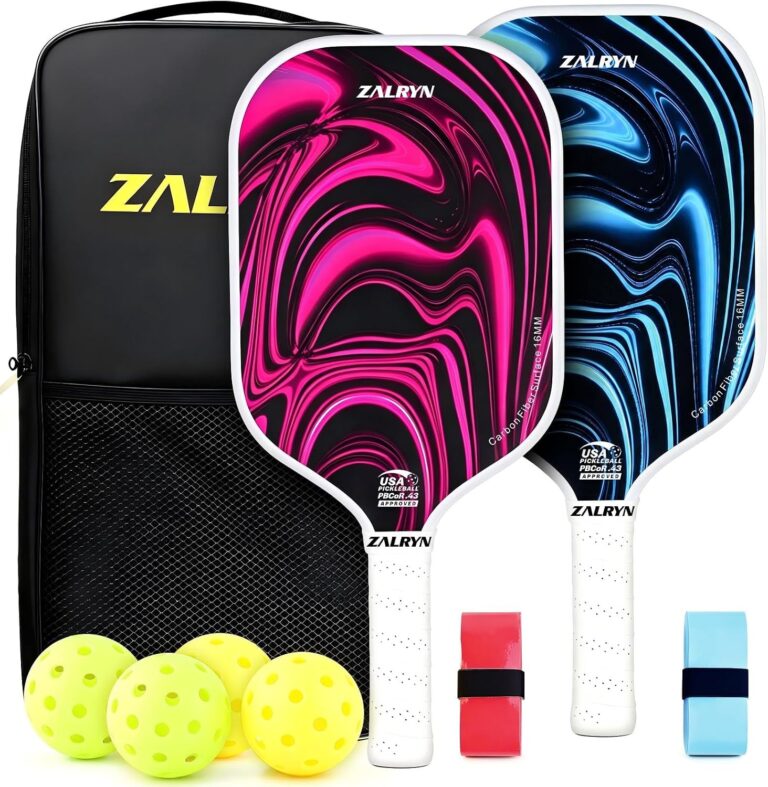
16mm Carbon Fiber Pickleball Paddle…
Product description 【Friendly for Beginners of All Ages】This pickleball paddle set is perfectly designed for beginners and casual players of all ages. Ideal for backyard, park, beach activities, family gatherings, recreational play and holiday gifts.【USAPA Approved Pickleball Paddle】Compliant…
Who it’s best for: Beginners and families shopping for an affordable, USAPA-approved combo set. The description highlights a larger sweet spot, comfort grip, and textured surface that assists learning basic strokes and spin.
Key strengths
- Designed for ease of use and beginner-friendly play.
- USAPA-approved construction means it meets standard play requirements.
- Set option is convenient for pair or family purchases.
Possible drawbacks
- Beginners may outgrow entry-level paddles quickly as skills improve.
- Limited advanced features compared to higher-end paddles.
Who should choose it: New players, casual families, and recreational groups who want a reliable starter paddle that follows common specifications and keeps costs low.
Practical buying advice: how to decide and try before you buy
- Start with your primary playing style: If your game is built on touch and drops, lean toward thinner-core paddles (14mm). For more pop and stability, lean toward 16mm options.
- Test multiple paddles at your club or demo events. Perceived differences in thickness are easier to judge when you can play with them for a few rallies.
- Pay attention to grip size and overall weight. A paddle that matches your hand and swing mechanics will outperform one that merely has the “right” thickness.
- Consider the face texture for spin. If spin matters, ensure the surface has a texture or coating designed to assist spin regardless of thickness.
- Read product pages and try to handle paddles before ordering. If buying online, confirm the return or exchange policy in case the feel isn’t what you expected.
- For mixed court environments (outdoors, windy), you may prefer paddles with a bit more pop (commonly thicker cores). For indoor-only players, thin-core paddles can provide the edge in touch.
Final recommendations
If you’re unsure, here are practical starter pathways:
- New players: Begin with an affordable, USAPA-approved 16mm starter paddle set to learn fundamentals and determine weight/grip preferences — see beginner category options such as our Beginner Pickleball Paddles and Beginner Pickleball Paddle Sets.
- Recreational players seeking balance: A 16mm paddle with a carbon face (like the T700 or thermoformed 6-layer options) typically hits a good balance of power and control.
- Players focused on touch and net play: Try 14mm paddles from the 14mm category (see 14mm Pickleball Paddles) to prioritize feel and dinking ability.
- Competitive players: Match your paddle selection to your style. Many competitors use 16mm carbon paddles for the added stability and predictable response on powerful shots, then adjust weight and grip to personal preference.
Helpful checklist before you buy
- Did you test the paddle or at least handle it for balance and grip comfort?
- Is the paddle USAPA-approved if you plan to play in organized competition?
- Does the face texture align with your spin needs?
- Does the core thickness match your preferred feel (14mm for touch, 16mm for pop)?
- Is the weight comfortable for long play sessions?
Frequently Asked Questions (FAQ)
1. Will a 16mm paddle make me hit harder?
Not automatically. A 16mm core often contributes to a firmer, more powerful feel, but actual shot speed depends on stroke mechanics, paddle weight, face material, and your swing. A thicker core can help deliver more pop when combined with the right face and weight.
2. Are 14mm paddles better for dinking?
Many players prefer thinner cores for dinking because they provide more dwell time and a softer feel on touch shots. That helps with delicate placement at the kitchen line. However, a well-designed 16mm paddle with a softer face can still be very effective at the net.
3. Does a thicker paddle cause more vibration to the arm?
Thicker, stiffer paddles can transmit more vibration on off-center hits, which some players notice. Core composition and face materials also affect vibration. If you are sensitive to vibration, try paddles in person to assess what feels comfortable.
4. Are 16mm paddles required for competitive play?
No. There is no rule that mandates a specific thickness. Competitive players use both 14mm and 16mm paddles depending on their style. Make sure the paddle is compliant with event or governing body requirements (e.g., USAPA approval if required for sanctioned events).
5. How does paddle weight interact with thickness?
Weight and thickness interact: a thicker core doesn’t always mean a heavier paddle. Manufacturers tune materials to achieve desired feel and weight. Choose a combination that suits your swing speed: lighter for quicker maneuverability, heavier for more momentum on drives.
6. Can I switch between 14mm and 16mm paddles depending on conditions?
Yes — some players own more than one paddle to match match conditions or opponent styles. It’s common to pick a paddle with more pop for outdoor/windy games and one with more touch for indoor or kitchen-focused play.
7. How should I decide between carbon and fiberglass faces?
Carbon/graphite faces generally provide a crisper, stiffer response, while fiberglass faces can feel a bit livelier. Spin is more about texture than face material alone. Try both face types to discover which complements your stroke mechanics best.
Where to browse related paddles on our site
Explore our paddle categories and additional gear:
- 14mm Pickleball Paddles
- 16mm Pickleball Paddles
- Carbon Fiber Pickleball Paddles
- Control Pickleball Paddles
- Advanced Pickleball Paddles
Final thoughts
Thickness is an important characteristic that affects feel, power, and touch, but it’s not the whole story. Your ideal paddle choice balances thickness with face material, weight, grip size, and playing style. If you spend most of your time at the net and prize soft touch, a 14mm-style paddle is worth exploring. If you want predictable pop and a firmer response for drives and blocks, a 16mm paddle is a strong option. Wherever you land, test different paddles if possible and choose the one that delivers confidence and consistency in your game.
Major Pickleball associations — Official links
- USA Pickleball (USAP): https://usapickleball.org
- International Federation of Pickleball (IFP): https://ifpickleball.org
- Professional Pickleball Association (PPA): https://www.ppatour.com
- Association of Pickleball Professionals (APP Tour): https://www.apptour.com